

Key Takeaways
- You put everything into the project and now the invoice is the one thing standing between you and actually getting paid for it.
- A messy or incomplete invoice gives clients the perfect excuse to delay payment and most of them will take it without hesitation.
- Breaking your services down line by line instead of throwing one big number at the client makes the whole thing far easier to approve and pay.
- Telling your client exactly how to pay you sounds obvious but leaving it out is one of the most common reasons payments drag on longer than they should.
- A small personal touch at the end of an invoice costs you nothing but leaves the kind of impression that keeps clients coming back.
So finally after putting your heart and soul in, you have completed your first freelance project and have even handed it over to your client, right? So what’s next? Well, your mission is not yet over. It’s time to face the final obstacle, getting paid. Like any other novice freelancer or small business, invoicing can be an alien task, however, you cannot run away from it.
Since, invoicing is the only source of your bread, butter, and comfort, certainly, it is an inescapable duty thus you have to be clear with the nitty-gritty of invoicing.
Traditional paper invoicing, readymade customized templates or cutting-edge billing software, the pattern of writing an invoice is universal and alike on all platforms. Once you get the hang of it, you can swiftly and smoothly cross this obstacle.
Invoice is not just your catalyst for getting paid, it is handy for freelancers in many ways. It is basically a legal record for the service provided to your client and proof of your payment. Any mistake you make in the invoice and will straight away affect your payment.
So, let’s learn how to write an invoice that will get you paid easily:
Here’s all you need to know about how to write an invoice!
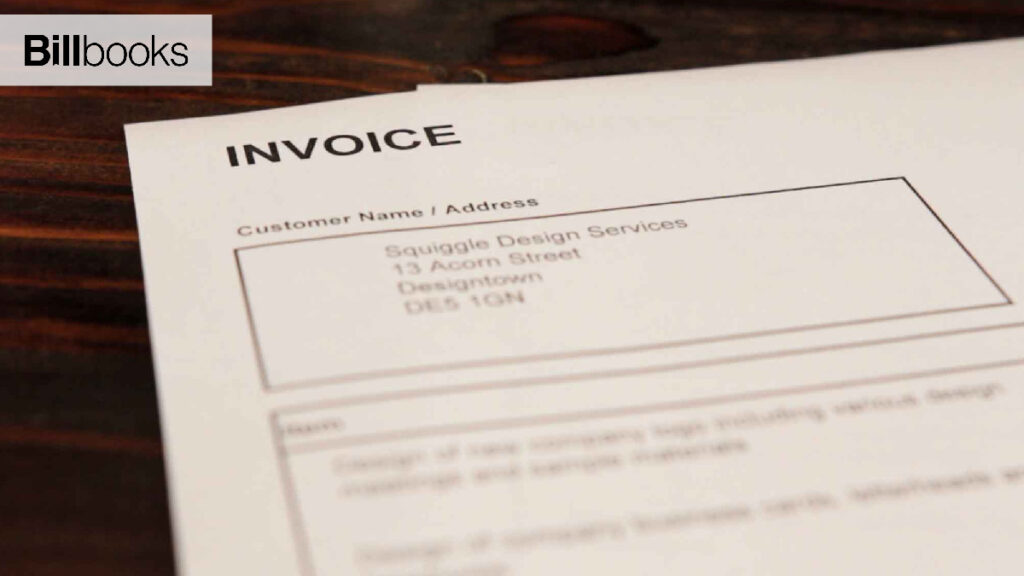
Before you kick off with the invoicing process, obtain all the necessary details of the client and business. Your invoice will be A-Okay with complete business, client and payment details.
Include your company details:
If you want to earn fame then exhibit your name.
Whether you are a freelancer, small agency or startup, definitely you will be having some name, right?
- You need to put your business name and logo on the header of the invoice
- Also include your email address, website address and phone number, so that your clients can get in touch with you whenever they look for
Client information:
Now it’s time to focus on information to whom the invoice is written. As mentioned above, you must have acquired all the essential details from the client.
- The typical client information, you need to put on the invoice is the client’s name, the person who is responsible to make the payment (for quick payment), email address, contact number
- Client information should be below your details. If your details are placed on the right side in the corner, then write client details on the left side of the invoice
Invoice details:
Of course, an invoice is incomplete without invoicing details. This information is necessary for business as well as the client.
- The primary invoicing elements to be added are invoice number, invoice date (when it is prepared), payment date
- You need to be aware of the payment terms, beforehand. Instead of mentioning the payment date, you can write 30 days from the date of invoice, 1st of next month or, due upon receipt
- You can write an itemized bill by listing the products/services offered and respective price
- Breakdown of services by dividing it into quantity worked to date, rate, hours of work will make it easy to sum and also the clients will find it easy to understand the bill. This will help the customers to know about the price of each factor
- You can follow any numbering system but every invoice should have a unique number and you need to continue with the same numbering system
Payment details:
Yes, now comes the vital part for which the invoice is prepared, payment.
- In this section, you will include the payment terms and payment options
- You need to mention what types of payment options you offer to your client. Whether you prefer your client to pay through cash, cheque, debit card or credit card, highlight it in your invoice
- If you accept payments through trusted payment gateways like PayPal, Braintree or 2Checkout, you can state it on your bill
Personal note
This is the last step in invoice creation which may often get overlooked, but this can create a solid professional impression if applied in the right way. Wondering what you can include under this point? Check out the below points:
- Upcoming seasonal deal
- Referral program and the related discount policies
- You can request reviews
What Should an Invoice Include?
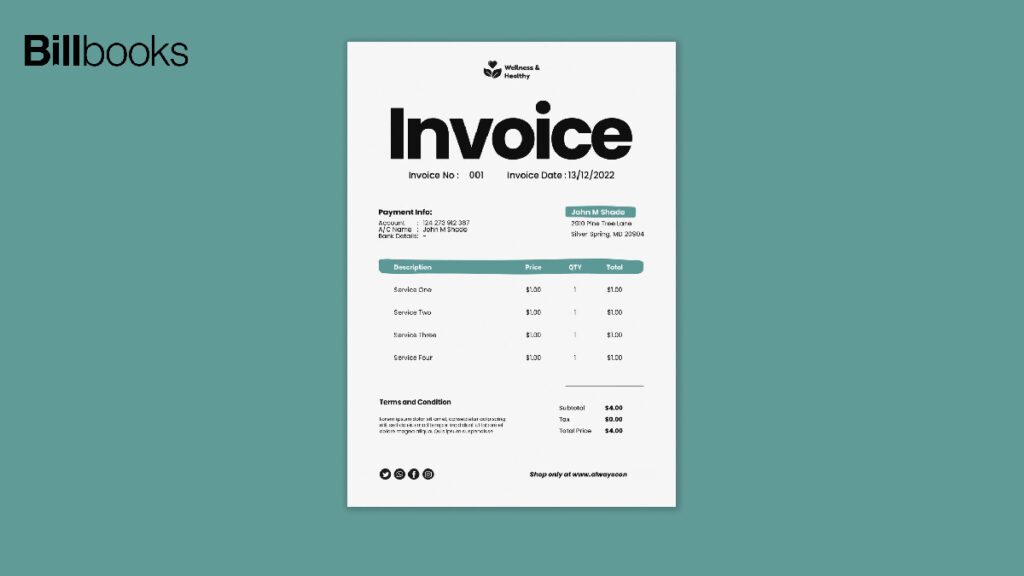
Let’s give a quick recap as to what all should be included in an invoice.
- Add the word ‘invoice’ in bold to emphasize the purpose of this accounting document which I’ll make stand out from a quote or estimate.
- Add a unique invoice number for better identification.
- Add your complete contact information- company logo, name, address, phone number.
- It is also important to mention the contact details of your clients, hence add that also.
- The invoice date is a must as that decides your payment due date.
- Mention clearly the total amount, taxes, and the total amount due.
- Give an itemized list of products along with the respective price of each.
- Lastly, mention the payment terms and instructions as well.
Additional tips to get your invoices paid faster
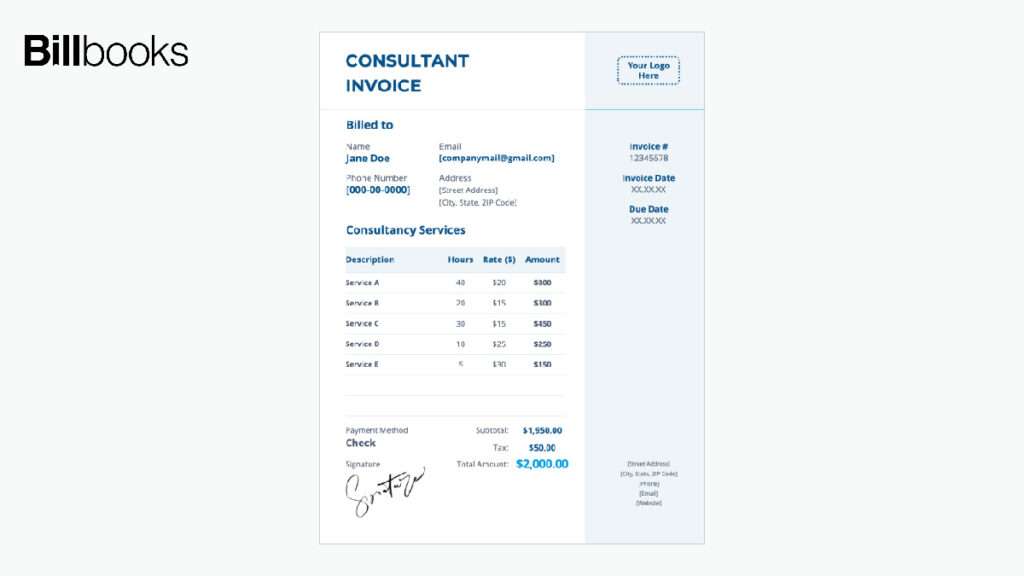
You have already got the idea of how to write an invoice. Now check out this section to get bonus tips to make your invoices payment-ready. Wanna know how? Take a look!
- It’s recommended to use professional design for your invoices to ensure brand position and stand out in the competition.
- Colors should be selected wisely, as that grabs the attention and renders a professional look. Blue is related to trustworthiness, hence, it is preferable to use this.
- Make your company name and logo visible to represent your brand. This will allow your clients to remember the business deal instantly and will help in getting paid promptly.
- A personal signature in the invoice will ensure that you are asking for the payment which will let your clients settle down the payment faster.
Creating invoices has got easier and faster with Billbooks!

Billbook offers ready-to-go templates that have all the necessary fields added. You just need to put the correct information and to make it up-to-date. Add the client name, project details, product list, payment info and get it ready in just seconds and send it off immediately. It is also easy to track all your invoice status with Billbooks.
When you are writing any invoice manually or in a computerized way, keep in mind that this piece of document is your only channel for income thus you cannot goof up with the invoicing process.
FAQs
Q1. What absolutely needs to go on every invoice I send out?
Think of it this way, if the client cannot immediately see who it is from, what they are paying for, how much they owe, and how to actually send the money, your invoice has a problem. Get your business details, their details, a proper breakdown of the work, a unique invoice number, payment terms, and payment methods on there every single time without fail.
Q2. How do I set up an invoice numbering system without overcomplicating it?
Honestly just start at 001 and keep going. The actual format does not matter nearly as much as being consistent about it. Every invoice needs its own unique number so that six months down the line when you need to track something down you are not digging through a pile of documents trying to figure out which one is which.
Q3. What payment terms actually make sense to put on an invoice?
It depends on your business and your relationship with the client but 30 days is the most common starting point. Some freelancers go with due on receipt for smaller jobs. Whatever you decide just write it clearly and specifically so the client knows the exact expectation and cannot play dumb about it later.
Q4. Do I really need to spell out how I want to be paid on the invoice?
Yes and do not skip this part. The moment a client has to stop and figure out how to actually send you money is the moment the payment gets pushed to tomorrow and then the day after that. Tell them upfront whether it is bank transfer, PayPal, card, or whatever else you accept and make it as easy as possible for them to just get it done.
Q5. What is the point of breaking down services line by line instead of just showing a total?
Because a single big number at the bottom of an invoice makes clients nervous and gives them something to push back on. When they can see exactly what each task cost and how the total adds up there is nothing to question and nothing to hide behind. It gets approved faster and paid faster almost every time.
Q6. Is a personal note at the end of an invoice actually worth adding?
It takes about thirty seconds and the return on that thirty seconds is genuinely worth it. A simple thank you or a mention of a referral discount turns a dry formal document into something that feels like it came from a real person. Clients remember that feeling and it tends to nudge them toward paying sooner rather than later.
Q7. Does the way an invoice looks actually affect whether people pay on time?
More than most people give it credit for. A clean well structured invoice tells the client they are dealing with someone professional and organised. A messy one that looks like it was put together in five minutes sends a very different message and sometimes quietly gives people permission to treat the payment with the same level of urgency you apparently gave the invoice.
Q8. Is invoicing software really necessary or is a Word document good enough?
A Word document is fine when you are just getting started and everything is manageable in your head. But the moment you have several clients on the go at once and you are trying to remember who paid last month and who still owes you from three weeks ago, it starts becoming a real problem. Software just handles all of that in the background so you never have to think about it.
