Key Takeaways
- An invoice is a seller's written request for payment. It states what was supplied, what it costs, and when the money is due.
- The essentials: the word invoice, a unique number, both parties' names and addresses, the invoice date, a description of the work, the amount, and the due date.
- The number should run in sequence and never repeat. That is what makes a set of invoices easy to check, and a gap in the sequence is an obvious question for anyone reviewing your books.
- State the payment method and the due date on the invoice itself. An invoice that does not say how or when to pay leaves the client a question to ask before they can pay it.
- You do not need a registered company to issue one. A sole trader invoicing under their own name is issuing a valid invoice.
What is an invoice? An invoice is a document a seller sends a buyer to ask for payment for goods or services already supplied. It lists what was provided, the price of each item, the total owed, and when and how to pay. It carries a unique number, so both sides can match a payment to the right sale.
You have finished the job, or the goods have gone out, and the client says "just send me an invoice". If you have never sent one, that sounds simple until you open a blank page and wonder what actually has to be on it, whether you need a company to send it, and what happens if you get it wrong. This guide answers all three.
Is this you?
- A client has asked for an invoice and you are not sure what counts as one.
- You have been sending a message or an email with a figure in it, and payments are slow or get queried.
- A client's accounts team sent your invoice back asking for a number, an address or a due date.
- You are not sure whether an invoice, a bill and a receipt are the same thing.
If any of those fit, the rest of this page is for you. None of it needs special software: a clear document with the right details on it is an invoice.
What is an invoice?
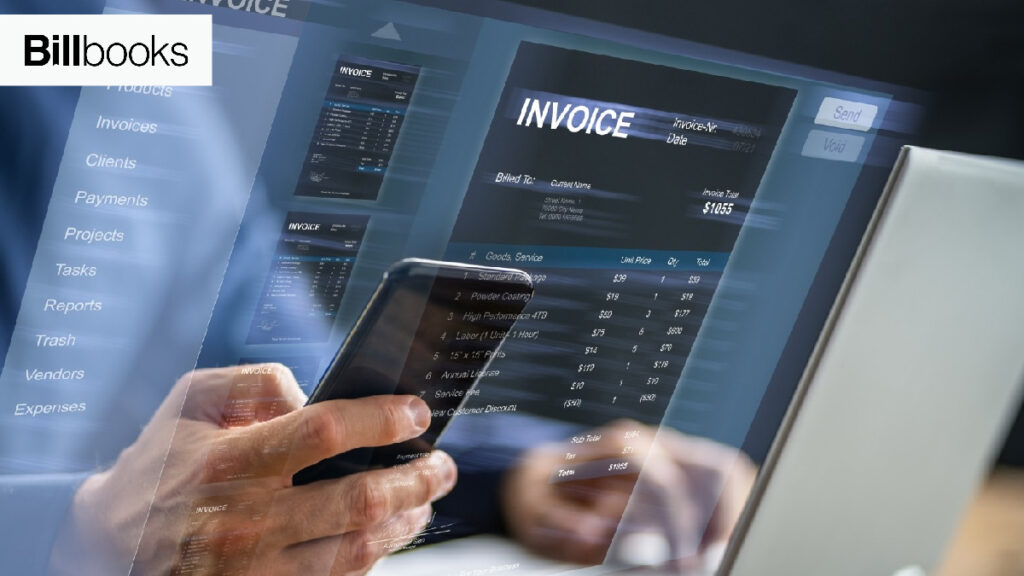
An invoice is a document issued by a business to a buyer that lists the products and services offered, quantity, cost, and request for payment for those products and services.
The invoice tells your client how much they have to pay and when the payment is due. It is a crucial document for businesses to get paid.
Historically, an invoice was a paper document. After a period of time, invoice templates became popular. Online invoicing software is a bit more advanced and easy way of creating and sending invoices to clients, these days.
What a typical invoice looks like in practice, from Billbooks invoice data across the invoices of small businesses (last 24 months, September 2024 to September 2026):
- The typical invoice is about $1,000; the middle half run from about $390 to $2,790 (US dollar invoices, per business).
- The typical invoice is paid 9 days after it is issued; one in ten takes 57 days or longer.
What is an invoice used for?
Invoice records a sales transaction between a buyer and seller and is used for a variety of purposes that includes:
Payment requests from clients
- To get paid on time
- Sales tracking
- Expense tracking
- Inventory tracking (if your business deals with product selling)
- Historical data to predict future sales
- Overview of business condition
- Tax filings
Good to know
Sales tax rules change what an invoice must show. In the UK, a business must register for VAT once its taxable turnover passes £90,000 in a rolling 12 months, and once registered it must show VAT on its invoices (source: GOV.UK). Check the rules where you trade.
What is included in an invoice?
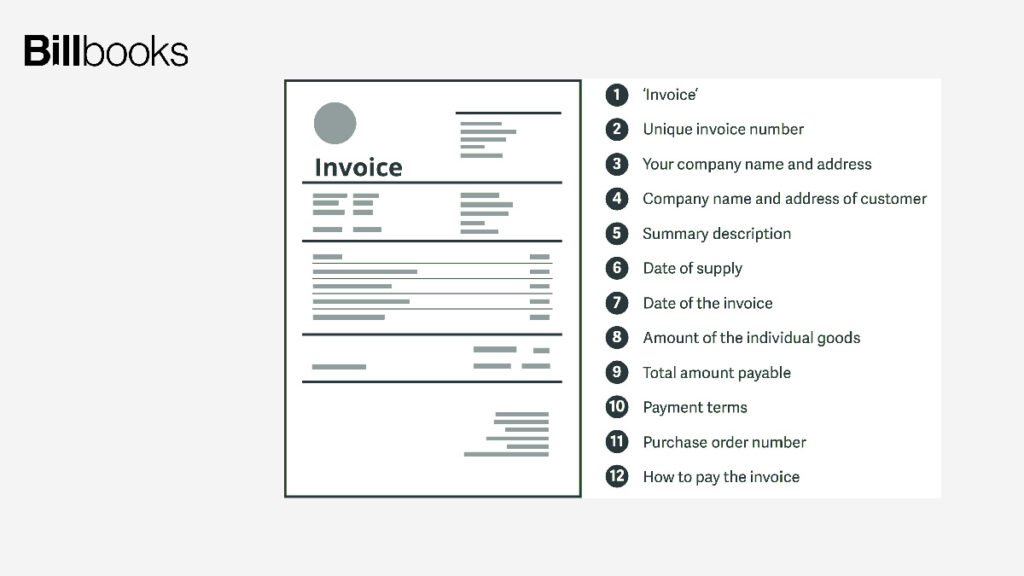
Any important information ignored in an invoice can result in failed payment and eventually affect your business finances. Every professional and standard invoice should contain a combination of the following details:
- Unforgettably the word ‘Invoice’
- A unique invoice number/ID for reference
- Customer’s information like name, address, contact details
- Business/seller’s information like name, address, contact details
- Date of invoice issued
- Payment terms which include mode of payment, payment due date, discounts
- Late payment charges if any
- Itemized list of products/services
- Description of products/services
- The total amount charged
In the UK, GOV.UK lists what an invoice must include: a unique identification number, your business name, address and contact details, the customer's name and address, a clear description of what you are charging for, the supply date, the invoice date, the amounts charged, any VAT, and the total owed (source: GOV.UK, Invoices: what they must include). That list is a good checklist wherever you are.
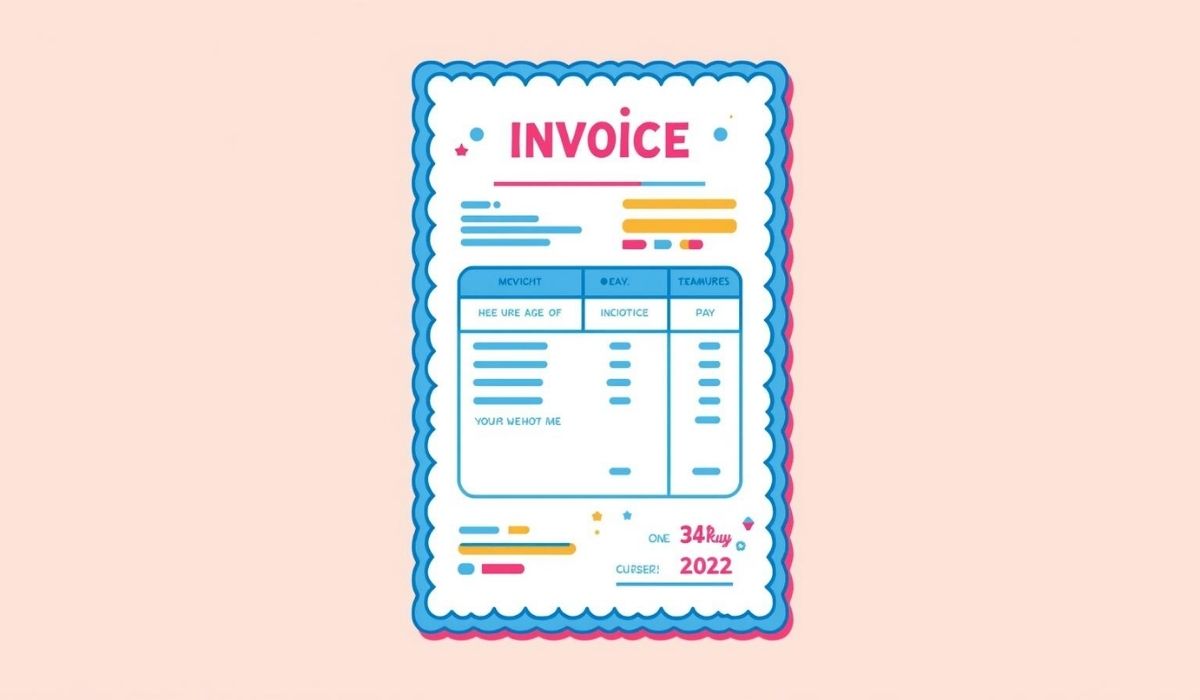
What does an invoice look like? A worked example
Say you are a freelance designer who has just delivered a logo and a set of business cards to a local cafe. The invoice you send might read like this:
| INVOICE | Invoice no. INV-0042 |
| From | Jane Smith Design, 12 High Street, Springfield, ja**@*****le.com |
| To | Corner Cafe, 4 Market Road, Springfield |
| Invoice date | 21 September 2026 |
| Due date | 5 October 2026 (Net 14) |
| Logo design, three concepts and final files | $600.00 |
| Business card design, 2 hours at $50 | $100.00 |
| Total due | $700.00 |
| How to pay | Bank transfer to the account below, quoting INV-0042 |
Every line answers a question the client would otherwise have to ask: who is this from, what is it for, how much, by when, and how do I pay it. Add sales tax as its own line if you are registered for it.
What is an invoice number/invoice ID?
An invoice number or invoice ID is a unique number generated for each invoice. This number is included in the invoice which acts as a reference number for business as well as the client to identify a particular transaction.
Best practices of assigning invoice number
Sequential
The usual way of numbering the invoice is the sequential way. Auto-updated or manually, it is an easy way of generating invoice numbers without worrying about duplicate IDs.
For example - Invoice No. #01 Invoice No. #02, Invoice No. #03…..
Chronological
You can assign the invoice number chronologically. It is usually date format affected sequence and the series of the number will be sequential.
For example - If the invoice is generated on 30 October 2020 and if the customer ID is 403 then the invoice number assigned would be 20201030-403-01 (yyyy/mm/dd-customer id-unique number).
Alphanumeric
An invoice number can also be uniquely a combination of numbers, letters, and special characters. However, even if the invoice number is alphanumeric, it is better to keep it sequential to avoid confusion.
For example - 2020/INV/01, 2020/INV/02, 2020/INV/03…..
Customer name or Project name/number
An invoice number can be assigned as a sequence using the customer name or even the project name or the number for more clarity as a reference in the future.
For example -
With Customer name - CN001, CN 002…
With Project name and number - PN-300-01, PN-300-02, PN-300-03…
With Project number - 300-01, 300-02, 300-03…
Need to send your first invoice today?
Fill in your details, your client and the work, and download a finished invoice with every item above already laid out. Nothing to install and no account needed.
Types of invoices
Most businesses use standard invoices for billing but there are some industries that require a specific type of invoice. It depends on the type of operation, the products, services, and various other factors.
If an invoice you have sent turns out to be wrong, you correct it with a credit note rather than editing or deleting it.
Standard invoice
Basic invoice including all details with the unique invoice number. It is used by most industries like retail, wholesale trade, agriculture.
Commercial invoice
It is used for customs declaration when the goods are sold internationally. Apart from basic details, this invoice also includes shipment quantity, the amount of tax payable, and other things necessary for cross-border sales.
Progress invoice
This invoice is used when the work is stretched for a longer period. Progress invoice is mostly used in the construction business.
Utility invoice
Telephone bills, electricity bills, internet bills, all such utility bills are considered utility invoices. The due date is already mentioned in such types of bills.
Proforma invoice
Similar to a quote or estimate, a proforma invoice gives the buyer a rough idea about the cost of products or services. The cost is negotiable. However, this invoice is not treated as a final invoice.
Recurring invoice
It is the invoice that is sent to clients on a regular basis. For the clients who are charged the same amount periodically, the recurring invoice can be sent.
There are more types. Know every type of invoice in detail. - Types of Invoices
Invoice, bill or receipt: which is which?
| Document | Who sends it | When | What it says |
|---|---|---|---|
| Quote or estimate | Seller | Before the work | This is what it will cost |
| Invoice | Seller | After supplying, before payment | This is what you owe and when |
| Bill | The same document, seen by the buyer | When it arrives | This is what we have to pay |
| Receipt | Seller | After payment | This is what you paid |
More detail in invoice vs receipt and the difference between an invoice and a bill.
Tips for invoicing

To make sure you invoice properly and get paid on time, follow these few tips:
- Negotiate and include suitable payment terms in your invoice
- Make sure the payment process is easy for clients so that you get paid on time
- Get upfront payments
- Include personal or thank you note on the invoice as this will help in retaining your customers
- Charge late fees if the client fails to pay on time
- Automate your invoicing process
Why keep a copy of every invoice
Your invoices are part of your tax records, not only a way to get paid. In the US, the IRS lists invoices among the documents that support the gross receipts you report (source: IRS, What kind of records should I keep). Keep every invoice you send, including any you later correct with a credit note, rather than deleting or overwriting it.
Switch to online invoicing
The details of the work and the professionalism that is offered by online invoicing software are unmatchable. Cloud-based invoicing software like Billbooks enables you to automate the invoicing process and send professional-looking invoices in less than 60 seconds.
Benefits of modern invoicing software:
- Create customized invoices
- Automate tedious recurring tasks
- Make the payment process easy and secure
- Reduce labour cost
- Chasing late payments made easy
- Improve cash flow with faster payments
- Enhance customer relationships
An invoice is not just a legal document or sales receipt, it is your ticket to get paid and improve cash flow. Right invoicing software can streamline your process and simplify accounting.
Sending invoices every month?
Billbooks numbers each invoice in sequence, puts the due date on it, and sends the reminders when a client is late, so nothing on this page has to be remembered by hand.
Three free tools for getting your first invoice right
Frequently asked questions
What is an invoice in simple terms?
An invoice is a request for payment. The seller sends it to the buyer after supplying goods or services, and it says what was supplied, how much is owed, when it is due and how to pay. It carries a unique number so the payment can be matched to it.
What does an invoice look like?
It is headed with the word invoice and a unique number, shows the seller's and the buyer's names and addresses, the invoice date and due date, a line for each item or service with its price, any sales tax, the total due, and how to pay. The worked example above shows one laid out in full.
What is an invoice in business?
In business, an invoice is both the request for payment and the record of the sale. The seller uses it to track what is owed and to support the income it reports for tax, and the buyer uses it to approve and pay the purchase and to record the expense.
What are invoices used for?
Getting paid, first. They also record each sale, show what customers still owe, support your tax records, and give the buyer the paperwork their accounts team needs before it will release a payment.
When should an invoice be issued?
As soon as the work is finished or the goods are delivered, or on the dates agreed for staged or recurring work. The payment clock usually starts from the invoice date, so every day an invoice waits to be sent is a day added to the wait for the money.
How long should a client get to pay an invoice?
Whatever you agreed, stated as a date on the invoice. Due on receipt, Net 14 and Net 30 are common. In Billbooks invoice data, invoices due on receipt are paid in 15.9 days on average and Net 30 invoices in 47.2 days, so shorter terms bring the money in sooner.
Is an invoice legally binding?
An invoice on its own is usually not the contract. The binding part is the agreement to do the work or supply the goods, whether written or not, and the invoice is evidence of what is owed under it. Rules differ by country, so for a dispute over a large amount, speak to a lawyer.
Do I need a registered company to send an invoice?
No. A sole trader or freelancer can send a valid invoice under their own name. What changes is the detail: a UK sole trader, for example, adds their name and business name, and a limited company adds its full registered name.
What happens when a customer does not pay an invoice?
Start with a polite reminder that quotes the invoice number and due date, then follow up by phone. If the client disputes the amount, talk it through, and if it stays unpaid, a formal demand letter or a small claims court is the next step.
Is an invoice the same as a bill or a receipt?
An invoice and a bill are the same document seen from two sides: the seller sends an invoice, the buyer receives a bill. A receipt is different: it is issued after payment to confirm the money has been received.