
The job finished on Tuesday. The invoice went out on Friday, or the Monday after, because writing it needed a laptop and the laptop was at home. Nothing was wrong with the work and nothing was wrong with the client. Billbooks 3.0 puts the whole thing on your phone.
Three days between finishing and invoicing is not three days of admin. It is three days added to the front of a wait that was already going to happen, and it is the part of getting paid that is entirely within your control.
From our invoice data
The typical invoice is paid 9 days after it is issued; one in ten takes 57 days or longer.
Source: Billbooks invoice data, 8,483 invoices from 112 small businesses, September 2024 to September 2026 (aggregate only, figures shown only where 25+ businesses contribute). See the study
That is the case for doing the paperwork where the work is. Everything below is the app as it ships today, on Android and iOS.

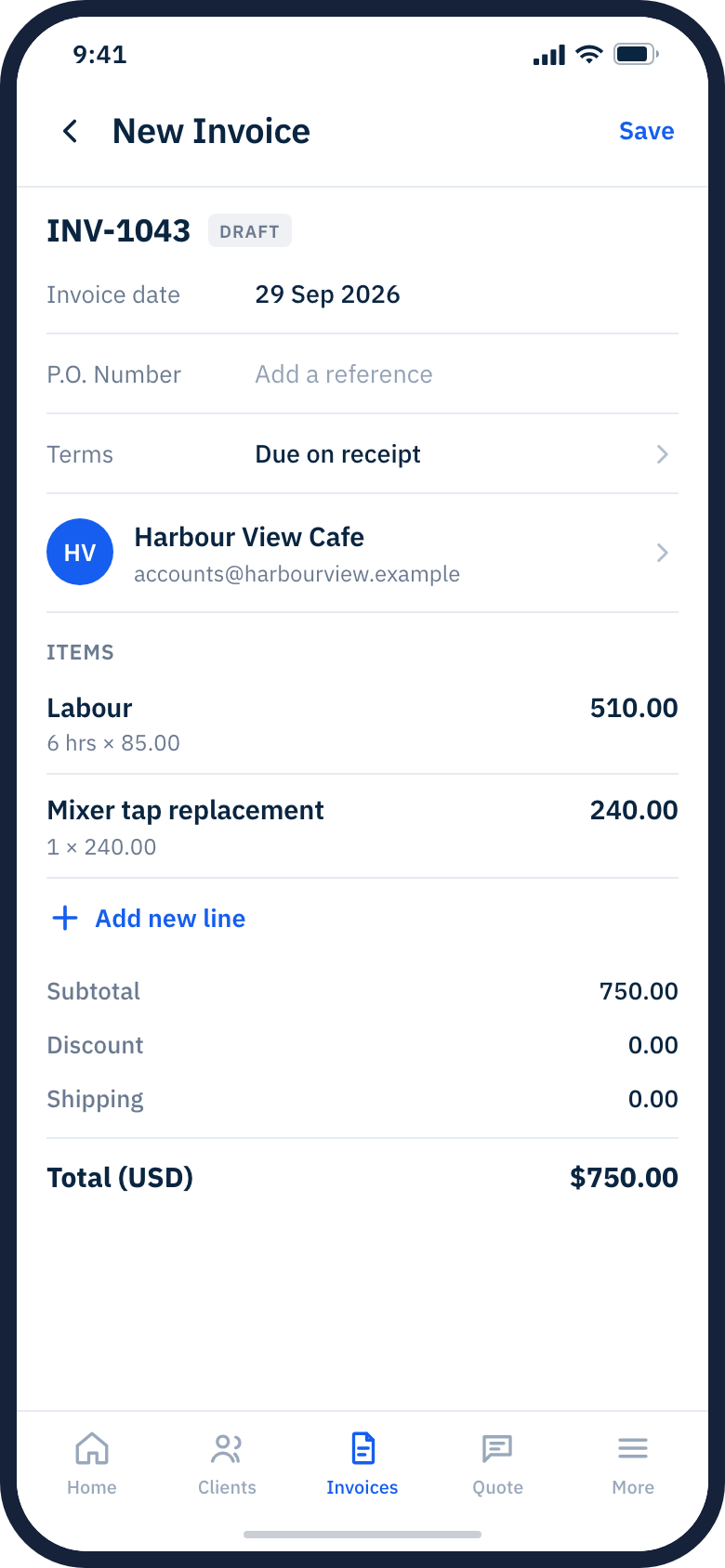
Pick the client, add the lines, send it. Hours and parts, a discount, shipping, a note, and a signature on the screen if the job wants one. It is a real invoice with your numbering on it, not a note to write up properly later.
The sample above is due on receipt, which is what most people use and what our own data says is paid fastest. Shorter terms bring the money in sooner: invoices due on receipt are paid in 15.9 days on average and Net 30 invoices in 47.2 days, while the share paid by the due date barely changes (39.1% against 42.3%).
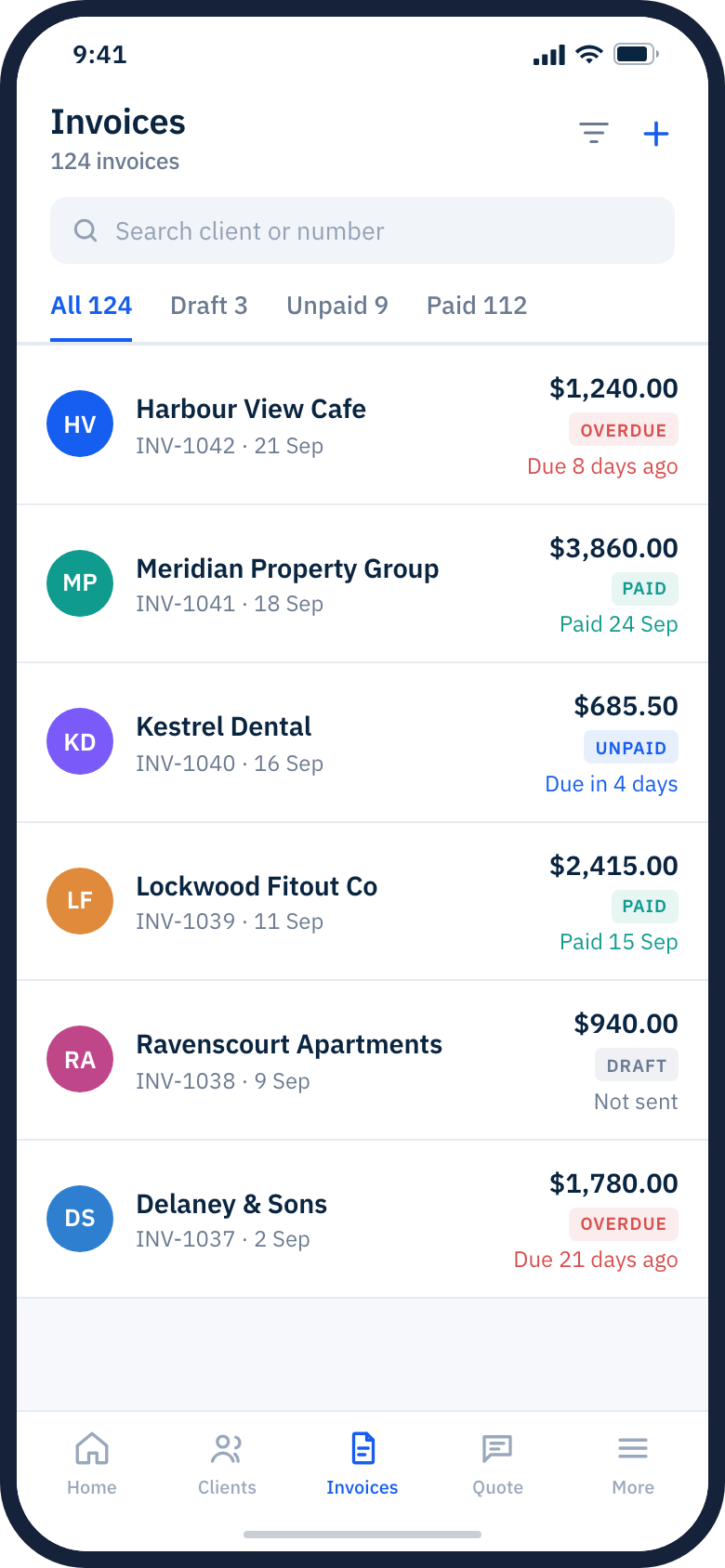
Every invoice with its status on it, filtered to the ones that matter: drafts you never sent, unpaid, and overdue with the number of days on the badge. Search by client or by number. If you bill in more than one currency, each invoice shows its own.
It matters more than it sounds, because late is the normal case rather than the exception. About 65% of paid invoices are paid after their due date (6,951 paid invoices, 67 businesses). Most invoices are due on receipt, so almost any payment after the day an invoice is sent counts as late.
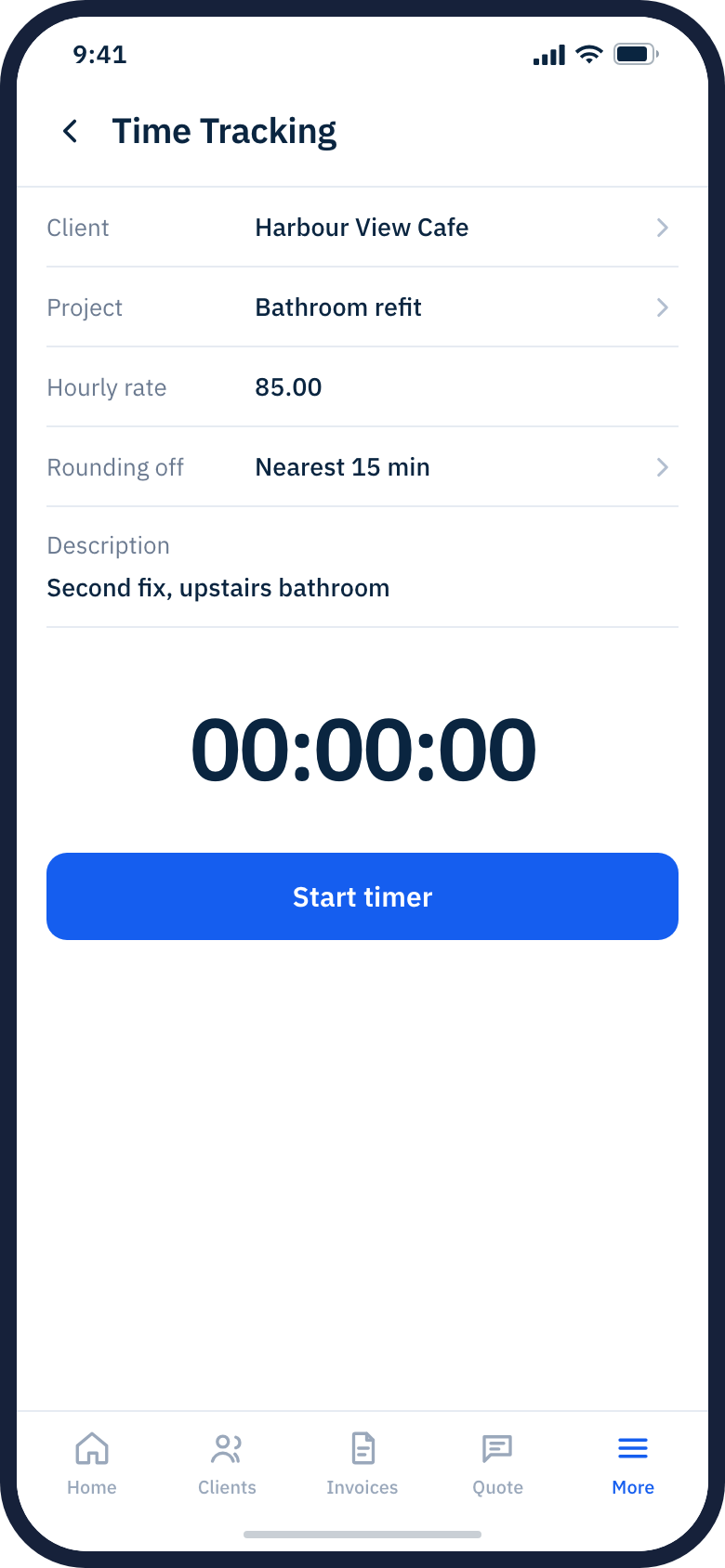
Start a timer against a client and a project, at that project's rate, rounded the way you round. Stop it and the hours are sitting there when you write the invoice.
The half hour on the phone and the trip back for a part are the ones that never make it onto a bill, because by Friday nobody can reconstruct them honestly. This is the difference between billing what you did and billing what you can remember.
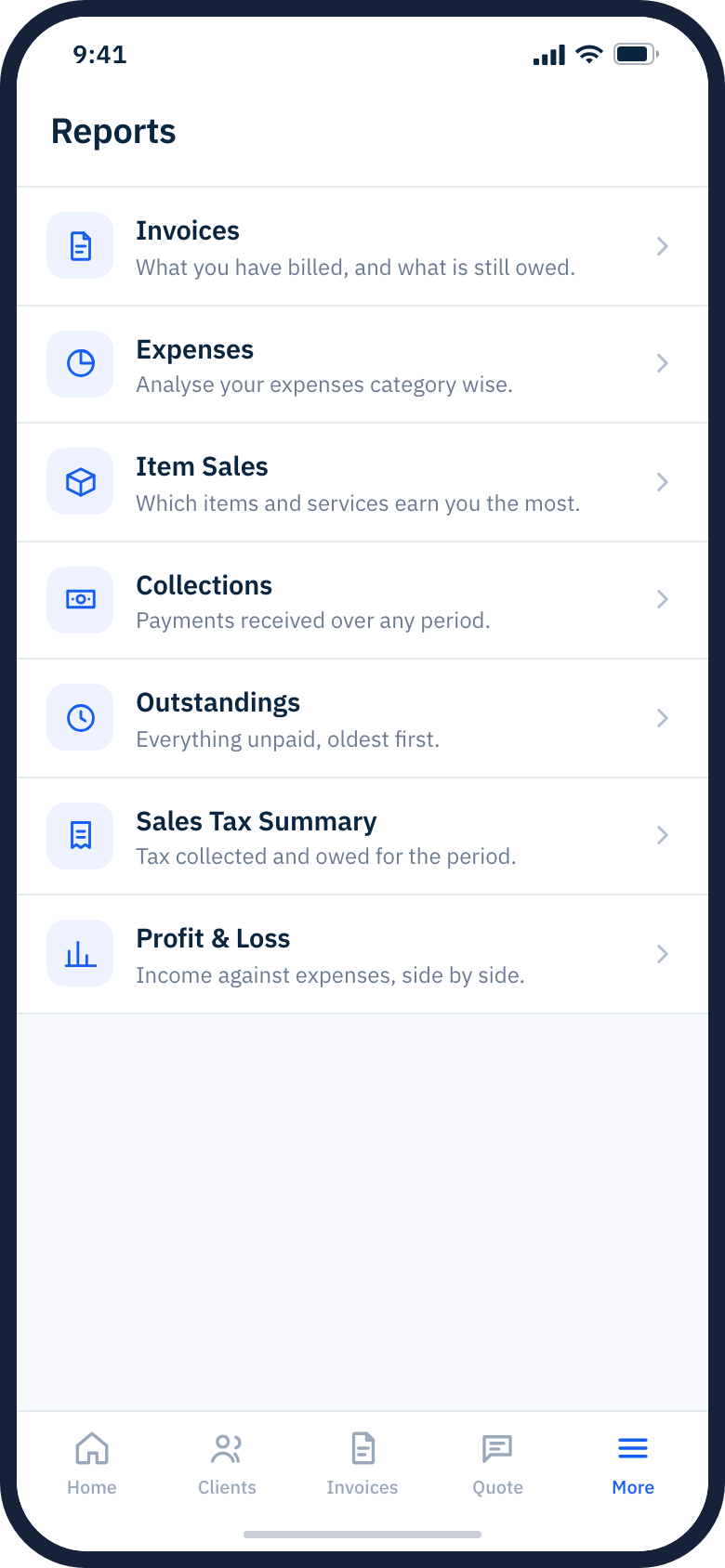
Invoices, Expenses, Item Sales, Collections, Outstandings, Sales Tax Summary and Profit and Loss. The two that get opened most are Outstandings, which is everything unpaid oldest first, and Item Sales, which is the one that tends to surprise people about which work actually earns.
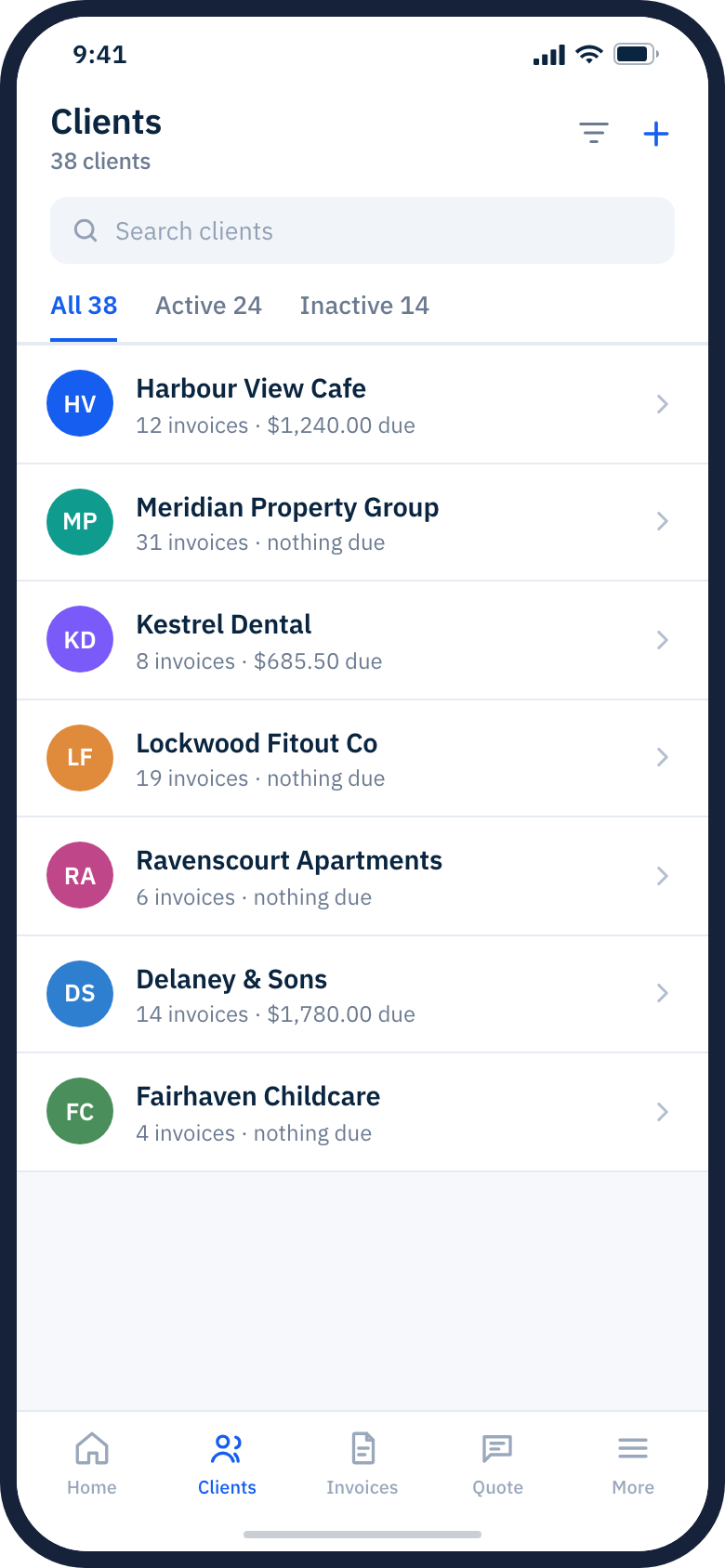
Everyone you bill, split into active and inactive, with what each one currently owes on the row. Tap through for their history before you ring them, which is a better position to make that call from than memory.
Worth knowing before you look: for the typical small business in our data, For the typical small business, the single biggest client accounts for 43% of a year's billing (58 businesses with two or more clients).
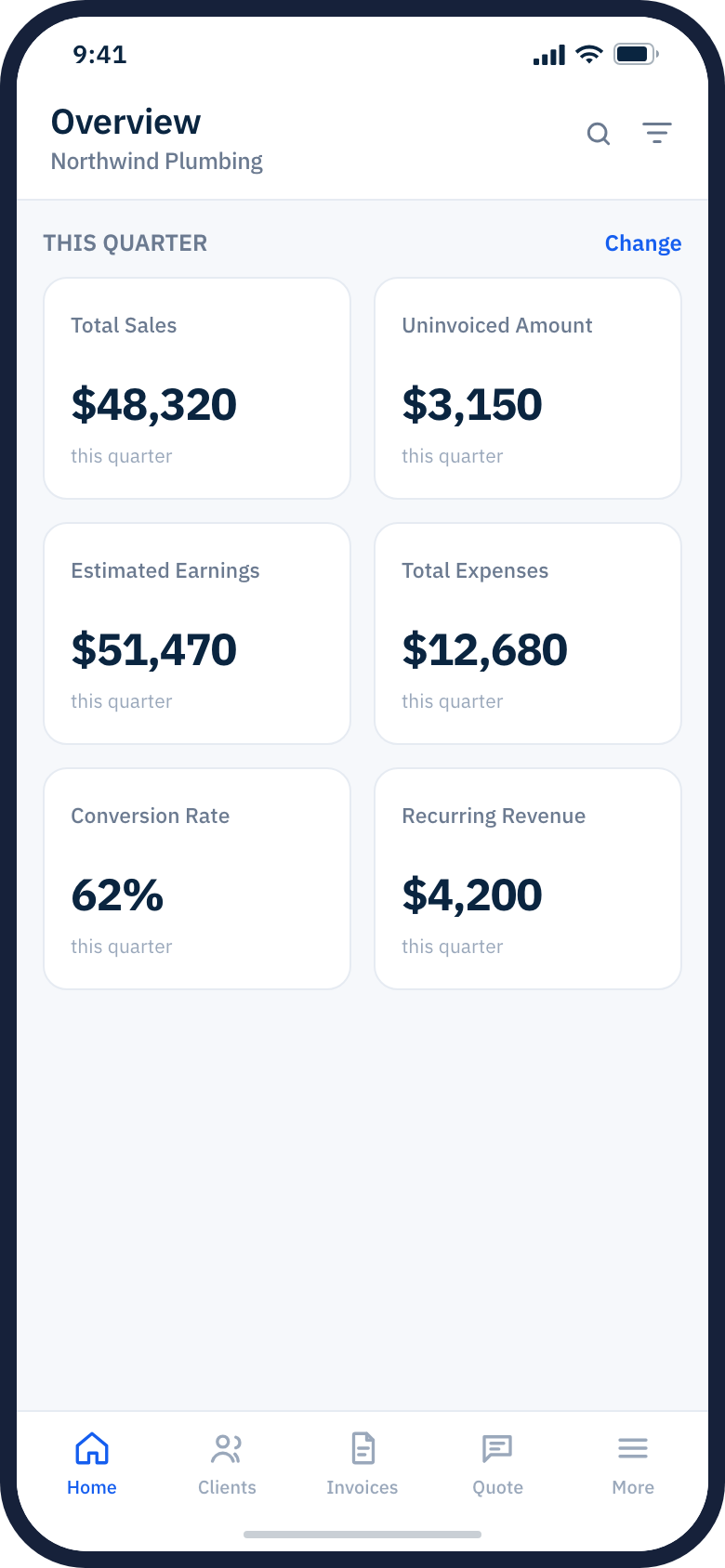
Sales, what you have worked but not yet invoiced, expenses, your quote conversion rate and recurring revenue, for the period you choose. The uninvoiced figure is the one to watch: it is money you have already earned that nobody has been asked for yet.
Whatever you do on the phone is on the web the moment you open it, because it is one account and one set of data. Raise the invoice on site, and it is there when you sit down. There is nothing to sync and nothing to import.
3.0 is a rebuild rather than a round of additions. The dashboard is new, every screen has been reworked, and a fair amount that was previously web only now exists on the phone:
No. The mobile app is included in your Billbooks plan at no extra cost, and there is no separate app charge. If you would rather start your subscription from the phone than from the web, you can, and it is the same plan either way.
No. You can sign up inside the app and verify your email there. If you already use Billbooks on the web, sign in with the same details and everything you have is already in it.
It needs a connection to send an invoice or load your data, the same as the web app. Do not count on raising invoices in a basement or out of signal.
iPhones on iOS 15.6 or later, from the App Store, and Android phones from Google Play. The download is about 65 MB on iOS.
Yes. It is one account and one set of templates, so an invoice raised on the phone carries the same numbering, branding and terms as one raised at the desk, and your client cannot tell which you used.
Yes. Start a timer against a client and a project at that project rate, with your usual rounding, and the hours are available to put on an invoice when you write it.
Pairs with Invoicing for what the documents themselves can do, Reports for the desktop versions of the seven above, and Pricing, which covers the app and the web together. New to Billbooks? The free invoice generator needs no account at all.